| |
|
|
|
|
 |
 |
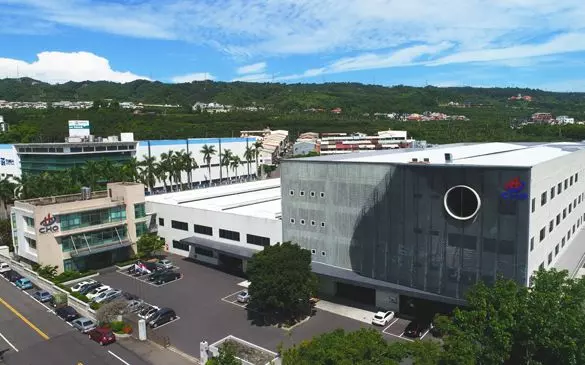
| 關於鉅鋐密封件研發體系作法,分析與整理研發知識實體、研發知識流動、研發流程與知識管理流程之互動;參考知識管理循環與知識地圖建構概念模式,定義案例問題、模式規格與功能;運用流程開發應用工具建構出本研究的研發知識管理模式雛型,對此雛型系統作初步評估與檢驗;最後以案例討論的方式提出研發知識管理模式的特色介紹、功能評估、效益評估、模式限制與模式延展性。 |
| |
| Fluid Compatibility |
| Type of Fluid to be Sealed |
Nitrile |
Polyacrylate |
Silicone |
Fluoroelastomer |
| Engine Oil (SAE 30 Wt.) |
VG |
VG |
VG |
VG |
| Engine Oil (SAE 10 Wt.) |
VG |
VG |
G |
VG |
| Gear Oil (Super Gear) |
VG |
VG |
F |
VG |
| Gear Oil (Hypoid Gear) |
G |
G |
NR |
VG |
| Turbine Oil No. 2 |
G |
G |
G |
VG |
| Machine Oil No. 2 |
G |
G |
F |
VG |
| Automatic Transmission Fluid |
VG |
VG |
F |
VG |
| Petroleum Base Lubricating O il |
VG |
VG |
F |
VG |
| Gasoline |
F |
NR |
NR |
VG |
| Light Oil/Kerosene |
F |
NR |
NR |
G |
Cutting Oil
|
VG |
G |
F |
VG |
Grease
|
VG |
VG |
VG |
VG |
E.P. Lubricants
|
G |
VG |
NR |
VG |
Water-Glycol
|
VG |
NR |
G |
F |
Alcohol
|
VG |
NR |
G |
F |
20% Hydrochloric Acid Solution
|
F |
F |
F |
VG |
| 30% Sulfuric Acid Solution |
F |
F |
NR |
VG |
|
| |
* Special compound available
VG - Very good
G - Good for most applications
F - Fair, can be used if no other materials available but otherwise not
recommended
NR - Not recommended |
| |
| Peripheral speed and number of revolutions |
Different designs of the sealing element affect the magnitude of the friction generated and thus the
resulting temperature rises. As a result the various designs of the sealing element allow different maximum
peripheral speeds. Figure shows the approximate maximum values for the permissible speed for sealing
elements (without dust lip), made with materials NBR, ACM, FKM and MVQ, with no differential pressure,
and where adequate lubrication or cooling of the sealing edge by the sealed medium exists.
In addition the maximum permissible operating temperature shown in Table III must not be exceeded.
The curve shows that higher peripheral speeds are permissible for larger shaft diameters than for smaller.
This is due to the fact that the cross-sectional area increases in proportion to the square of the diameter,
thus increasing the heat dissipation capacity. |
| |
 |
| |
| *Permissiblespeedsinpressure-freestatetoDIN3761 |
| |
| |
Materials:
Sealing Lip Materials |
Silicone (VMQ)
|
Ethylene Propylene (EPDM) |
Nitrile (NBR)
|
Epichlorohydrine Ethylene Oxide (ECO) |
Polyacrylate (ACM)
|
Styrene-Butadiene Rubber (SBR) |
Fluoroelastomer (Viton) (FKM)
|
Hydrogenated Nitrile (HSN) |
Fluorosilicone (FVMQ)
|
Butyl Rubber (IIR) |
| Ethylene Acrylic (AEM) |
Natural Rubber (NR) |
|
| |
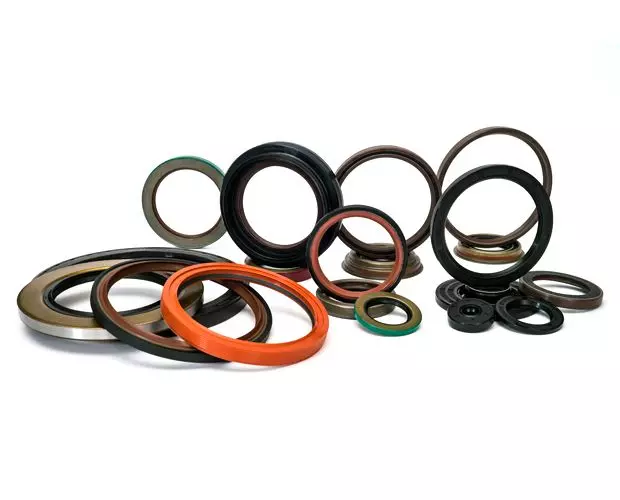
| At CHO, we work with virtually every single base polymer that is commercially available. This allows us to use the optimum material for each customer’s application. |
| |
| Lip/Elastomer Information |
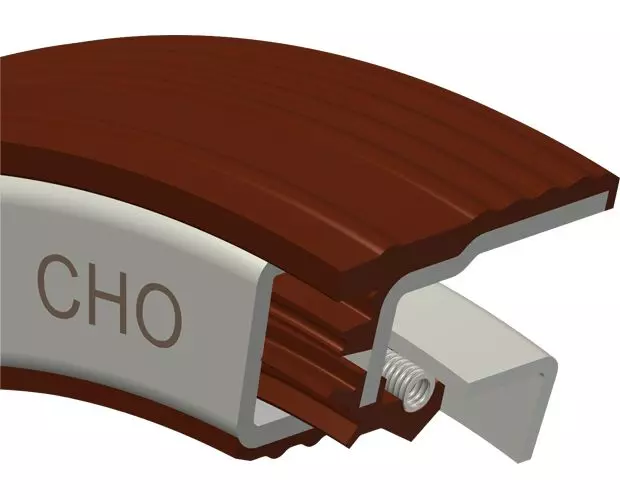
| One of the most important components of the seal is the elastomer material. CHO has developed
elastomer blends to meet a wide variety of sealing requirements. Available are many classes of
materials with individual formulas to satisfy various sealing conditions. The data below provides
general information and fluid compatibility ratings. |
| |
| General Elastomer Information |
| Base Polymer |
Nitrile |
Polyacrylate |
Silicone |
Fluoroelastomer |
| Temperature Range* |
-50°F ~ 250° |
-20°F ~ 300° |
-80°F ~ 400° |
-30°F ~ 400° |
| |
-45°C ~ 125° |
-30°C ~ 150°C |
-60°C ~ 200°C |
-35°C ~ 200° |
| Oil Resistance |
VG |
VG |
G |
VG |
| Acid Resistance |
G |
F |
F |
F |
Alkali Resistance
|
G |
NR |
NR |
F |
Water Resistance
|
G |
F |
G |
G |
Heat Resistance
|
G |
VG |
VG |
VG |
Cold Resistance
|
G |
F |
G |
F |
Wear Resistance
|
VG |
VG |
G |
VG |
| Ozone Resistance |
G |
VG |
VG |
VG |
|
| |
* Maximum temperature limits dependent on other operating
conditions.
VG - Very good
G - Good for most applications
F - Fair, can be used if no other materials available but otherwise not
recommended
NR - Not recommended |
NOTES:
1. Phosphate Ester and Water Glycol hydraulic fluids are not
included in the Table
2. Water resistance includes steam. No material is ideally
compatible, as lubricity of water is very poor.
3. PTFE, Ethylene Acrylate, and other elastomers are available. |
|
| |
| |
ADVANTAGES |
DISADVANTAGES |
| Nitrile (NBR) |
| . |
Commonly referred to as Buna-N and a Copolymer of
Butadiene and Acryonitrile |
| . |
Low cost |
| . |
Good resistance to petroleum oils, water, silicone oils, greases, glycol base fluids |
| . |
Good abrasion resistance, cold flow, tear resistance |
|
| . |
Poor resistance to ozone and weather aging
Polyacrylate (ACM) |
|
| Polyacrylate (ACM) |
| . |
Polymerised acrylic acidesters |
| . |
Good resistance to mineral oils, hypoid gear oils, E.P.
additives, greases, aging and flex cracking |
| . |
Higher temperature limit than Nitrile |
|
| . |
Fair cold temperature limit |
| . |
Lower mechanical strength |
| . |
Costs slightly higher than Nitrile |
| . |
Poor dry running ability, water esistance |
|
| Silicone (VMQ) |
| . |
Broad temperature resistance |
| . |
Good ozone resistance |
| . |
Resistant to compression set |
|
| . |
Low resistance to hydrocarbon fluids like
gasoline or paraffin fluids or steam above 50 psi |
| . |
Cost is higher than Polyacrylate |
|
| Fluoroelastomer (FKM) |
| . |
Good temperature resistance |
| . |
Compatible with wide range of fluids |
| . |
Commonly chosen as high temperature replacement of Nitrile or Polyacrylate |
|
| . |
Fair resistance to water, dry running |
| . |
Low temperature resistance is fair |
| . |
Cost is high |
|
|
| |
|
 |
| |
 |
| |
| |
| |
 |
| |
| |
| |
|
|
|
|
|
|
|